
Choosing a home temple by width alone feels simple, yet width says little about how the mandir will look in a real room. A 4-foot unit that crowds a small flat can look lost in a double-height hall. A Gujarat marble temple manufacturer that studies your room first helps you avoid both outcomes.
Surat’s housing mix makes this harder, with compact apartments in Adajan a short drive from spacious bungalows in Vesu. A Gujarat marble temple manufacturer that builds widths from 3 feet to beyond 6 feet can match each of these homes with a design drawn for its walls. Your family gets a mandir that belongs where it stands.
The Room Details a Width Chart Never Shows
The Door and Ceiling Check: Ceiling height and door swing affect a home temple as much as wall width does. A tall shikhara under a low false ceiling looks squeezed, and a door that opens across the temple blocks where your family stands for aarti. Installers in Surat often find temples ordered from a size chart without anyone checking the door.
Delays That Shrink Your Choices: Leaving the temple decision until after possession often keeps the murtis on a makeshift shelf for months. Demand for home temples rises ahead of Navratri and Diwali, so late orders can face longer waits. Families short of time often accept a smaller stock design, and a wall planned for a 5-foot temple ends up half empty.
See also: Creating More Efficient and Well-Organized Facilities
From 3-Foot Wall Temples to 6-Foot Centrepieces
3-Foot and 4-Foot Temples: A 3-foot marble temple fits most 2BHK living rooms and sits well on a wall between two windows. It usually holds one main murti with room for a pair of smaller idols. A 4-foot temple suits most 3BHK homes and adds space for a carved arch above a drawer for incense and matchboxes.
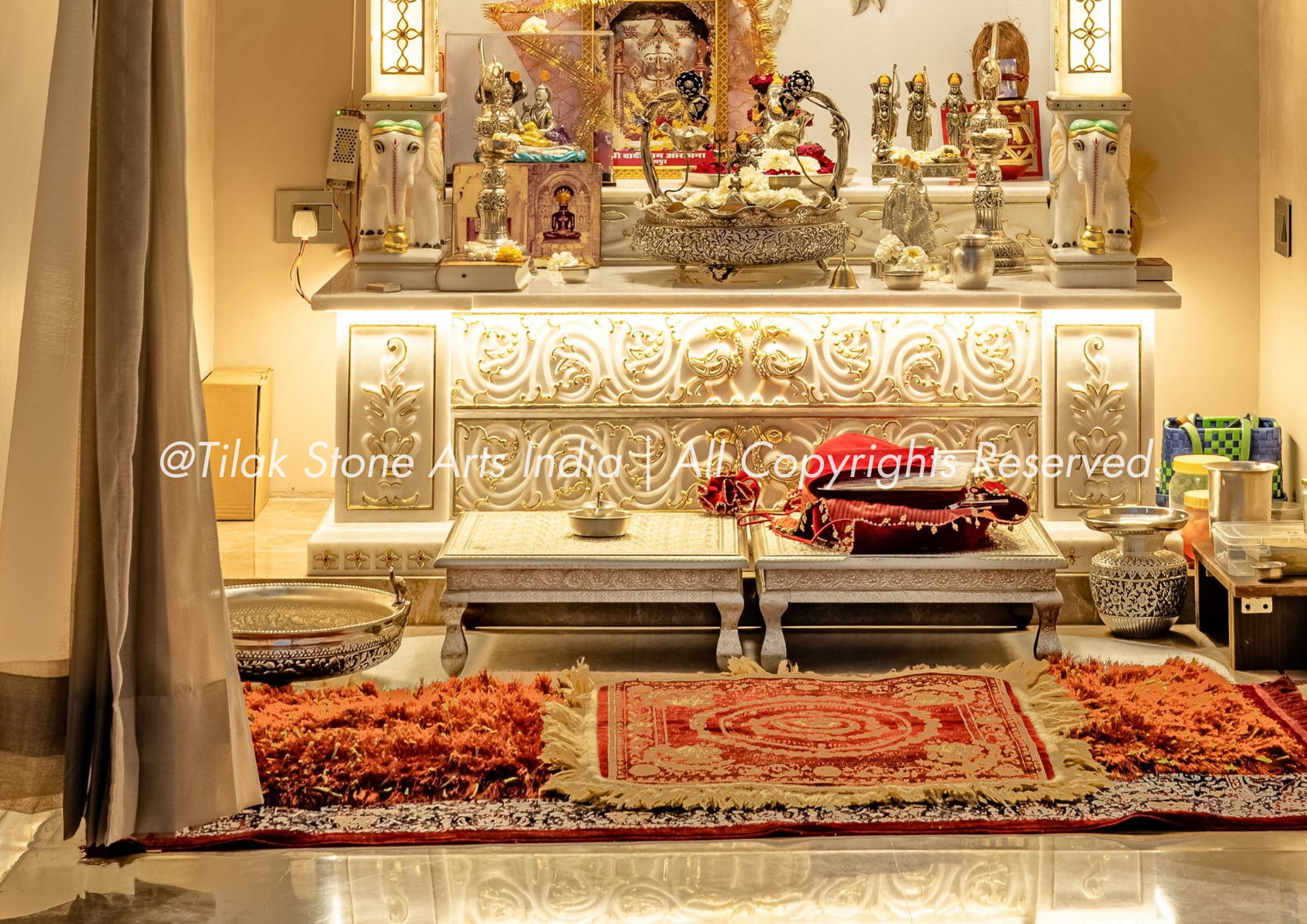
5-Foot and Larger Statement Temples: A 5-foot temple suits a separate pooja room, where a domed shikhara and side pillars stay clear of furniture. At 6 feet and beyond, the temple becomes the centre of a bungalow’s prayer hall, often raised on steps. For these sizes, a Gujarat marble temple manufacturer plans the weight and delivery route before production starts.
What Shapes the Final Look of a Marble Mandir
Main Deity Sets the Proportions: The height of the main murti sets the temple’s inner proportions, so designers size the arch and platform around it. In traditional temple design, the deity rests in the sanctum Sanctorum, the innermost niche that draws the eye first. Placing the murti’s face near the eye level of a seated or standing devotee makes daily darshan feel natural.
Carving Density and Surrounding Décor: Carving density should match the style of the room. A home with plain modern walls suits a temple with a few deep motifs, while a traditional haveli-style interior can carry fuller floral work. Designers weigh scale and proportion against nearby furniture and lighting, so the mandir looks like part of the décor.
Comparing Ways to Buy a Home Temple in Surat
Wooden Units and Online Listings: A carpenter-built wooden mandir usually costs the least and can match any width. Wood near daily lamps dries and darkens over time, though, and needs repolishing. A marble temple bought from an online listing arrives faster, but its size and carving follow a stock template that may not suit your wall.
Custom Marble for Your Wall: A custom marble temple costs more upfront and takes longer, since design approval comes before production. In exchange, a Gujarat marble temple manufacturer fits the temple to your exact wall and murti sizes. Marble also outlasts wood by decades, so the higher first cost spreads across a much longer working life.
Consultations and Local Support for Surat Homes
What a Design Consultation Settles: A personalised design consultation turns a rough idea into a temple sized for your available space. Designers ask who prays and whether elders need a seated height, then study photos of the room. The result is a 2D plan showing the temple style and deity placement, followed by a 3D model once that plan is final.
End-to-End Project Support in Surat: Temple design teams serving Surat offer customised temples in super fine white Vietnam marble, from compact wall units to large freestanding structures. Production progress can be tracked online, with final photographs shared for approval before dispatch. The same team delivers and installs the temple at your home, so one party answers for the result.
Preparing for Your First Temple Design Meeting
Details Worth Gathering Early: A little preparation makes the first meeting far more useful. A Gujarat marble temple manufacturer can suggest the right width much faster when it receives accurate details from your home, and a few simple notes often save a full round of revisions. Collect the following before you meet a designer.
- Measure the wall width and ceiling height at the exact spot where the temple will stand.
- Note the height of each murti you plan to keep, including its base.
- Check which direction the wall faces with a phone compass.
- Take a photo of the room from the doorway so designers can judge the view on entry.
- Write down how many people usually gather for aarti on festival days.
Room for Devotion at Every Width
A temple matched to your room keeps daily prayer comfortable and lets the deity remain the clear focus of the space. Waiting only shortens the time available for careful carving. Share your wall measurements with a temple design team in Surat and ask for a width recommendation before you settle on a size.